

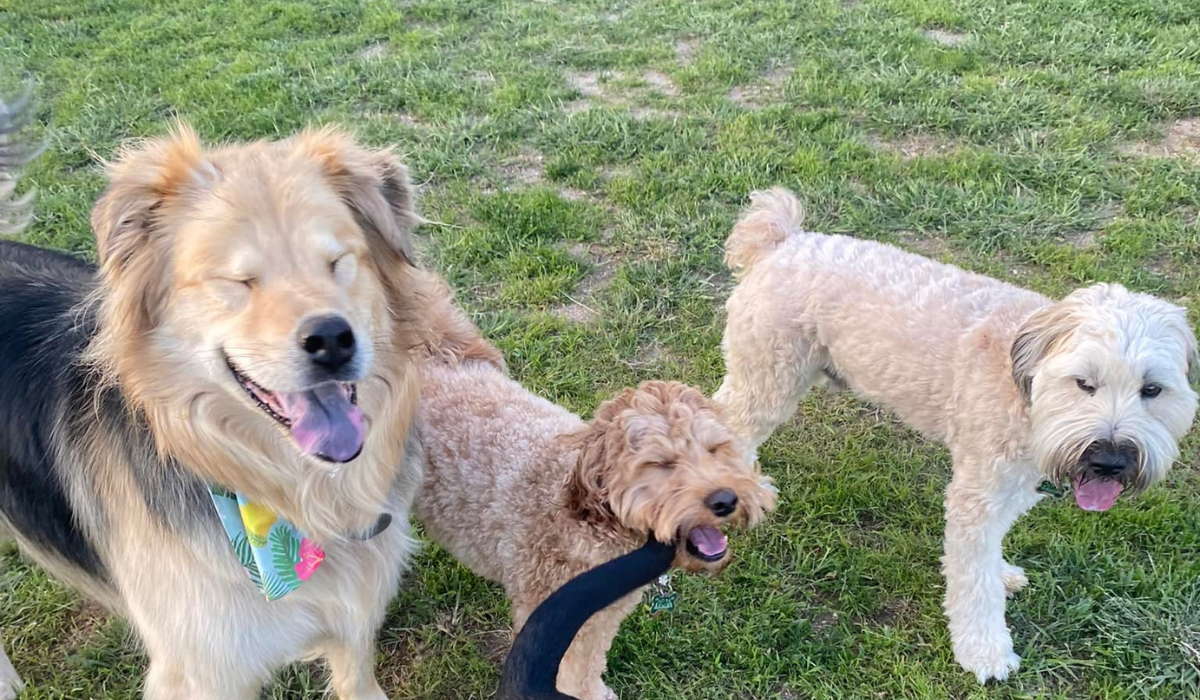
Dog daycare in Colorado Springs does more than burn energy: structured, supervised play directly reduces the fear, anxiety, and stress responses that drive destructive behavior in under-stimulated dogs. Most behavioral problems that Colorado Springs pet owners report, including chewing, excessive barking, house soiling, and aggression, are not character flaws. They are predictable outputs of a nervous system that has not had its needs met. Understanding why this happens, and what a well-run daycare environment does about it, is the foundation of making a good decision for your dog.
Part of Our Pet Owner Resource Hub
This post is part of our ongoing pet owner education series. Browse all guides and articles in the Resource Hub.
Fear, Anxiety, and Stress in Dogs: What Every Pet Owner Should Understand Before Choosing Daycare
What Fear, Anxiety, and Stress Actually Mean
Fear, anxiety, and stress, collectively referred to in veterinary and animal care settings as FAS, are distinct but related states that all trigger the same underlying biological response in dogs. Fear is a response to a specific, present threat. Anxiety is anticipatory, driven by uncertainty about what might happen. Stress is the cumulative physical and emotional load that builds when a dog cannot adequately cope with its environment.
When a dog experiences elevated FAS, the body responds the same way it does in any mammal facing a perceived threat. Cortisol and adrenaline flood the system. Heart rate and respiration increase. Digestion slows. The immune system is temporarily suppressed. In the short term, this is adaptive. In a dog that experiences chronic stress, these physiological changes become damaging over time, contributing to immune dysfunction, digestive problems, and entrenched behavioral issues that become harder to address the longer they go unmanaged.
How Chronic Stress Alters Thinking and Behavior
A dog operating under chronic stress is not thinking clearly, and that is not a figure of speech. Elevated cortisol impairs the prefrontal functions responsible for impulse control, learning, and social processing. A dog that cannot learn effectively in a stressed state will not respond to training the way a calm dog would. A dog that cannot process social signals accurately is more likely to misread other dogs and people, increasing the risk of reactive behavior.
This is why under-stimulated dogs so often develop behavioral problems that seem unrelated to boredom. The dog that chews furniture, the dog that barks for hours while alone, the dog that becomes reactive on leash after months of isolation: these are all expressions of a nervous system under chronic load. Exercise and social engagement are not luxury additions to a dog's life. They are biological requirements.
The Four F's: How Dogs Respond to Fear and Stress
When a dog encounters a stressor it cannot escape or resolve, it defaults to one of four instinctive responses: fight, flight, freeze, or fidget. These are known in animal behavior as the Four F's, and recognizing which response your dog defaults to is essential for placing them in the right environment.
- Fight: The dog moves toward the threat with aggression. This is often a last resort when other options have failed.
- Flight: The dog attempts to create distance. Pulling on the leash, hiding, or bolting are all flight responses.
- Freeze: The dog becomes still and unresponsive. This is commonly misread as calm when it is actually a state of high stress.
- Fidget: The dog displaces stress into repetitive activity: spinning, yawning, licking, panting, or excessive sniffing.
Staff at a well-run daycare facility are trained to recognize these signals before they escalate. Catching a freeze or a fidget response early allows for a de-escalation that prevents the situation from progressing to fight or flight.
Reading Body Language: The Signals Most Owners Miss
Dogs communicate stress continuously through body language, and most owners are trained to notice only the obvious signals. A growl, a snap, or pinned ears are easy to read. The earlier signals are much subtler and far more useful for prevention.
Rising FAS in dogs typically presents as: whale eye (showing the whites of the eyes), a tucked tail, flattened ears, excessive yawning outside of tiredness, lip licking without food present, a stiff or low body posture, and weight shifting away from a person or animal. A dog that suddenly stops engaging with play and begins sniffing the ground obsessively is not distracted. It is using displacement behavior to manage rising stress.
At 4 Paws Country Kennels, our team is trained to read these signals in real time during daycare and boarding. Recognizing them early allows us to remove a dog from a situation before it becomes a problem, which protects both the individual dog and the others in their group.
Structured Daycare vs. the Dog Park: Why the Difference Matters
Dog parks are unstructured environments where dogs of unknown temperament, health status, and history interact without supervision or intervention. For many dogs, particularly those with any degree of social anxiety or reactivity, dog parks rehearse stress responses rather than resolving them. A dog that has a negative encounter at a dog park is more reactive the next time, not less.
Structured dog daycare in Colorado Springs operates differently. Dogs are assessed before joining any group. Play is supervised continuously by staff who intervene before tension escalates. Rest periods are built into the day to prevent over-arousal, which is itself a stress state. The environment is managed, not just observed.
For dogs that are not suited to group play at all, individual rotation during daycare or boarding provides the exercise and stimulation benefits without the social pressure. Our doggy daycare program and our dog boarding program both accommodate dogs that need a solo approach. Visit our boarding FAQ for more on how we handle different temperaments.
The Considerate Approach: How We Interact With Every Dog
The Considerate Approach is a framework used in Fear Free animal care that prioritizes the dog's emotional experience at every point of contact. In practice, it means staff never rush a dog that is hesitant, never force interaction, and always give the dog a way to create distance if they need it. It means crouching rather than looming, offering a hand rather than reaching over, and reading the dog's response before moving forward.
For boarding and daycare specifically, the Considerate Approach shapes how we handle arrival and departure, how we introduce dogs to new spaces, and how we manage feeding, rest, and outdoor time. A dog that feels in control of its environment, even in small ways, experiences significantly lower FAS than a dog that is moved through a facility without agency.
Pain and Illness: The Hidden Driver of Behavioral Change
Underlying pain or illness is one of the most commonly overlooked contributors to elevated FAS in dogs. A dog that has suddenly become reactive, withdrawn, or resistant to handling may not have a behavioral problem at all. It may be hurting.
Common signs of pain in dogs include: reluctance to be touched in specific areas, changes in posture or gait, reduced appetite, increased vocalization, irritability when approached, and uncharacteristic aggression. Before attributing a behavioral change to stress or temperament, a veterinary evaluation is always worth considering. We flag any behavioral changes we observe during a dog's stay and communicate them directly to owners at pickup.
The 4 Paws Fear Free Arrival Plan
Drop-off is one of the highest-stress moments in a boarding or daycare experience, for the dog and often for the owner. At 4 Paws Country Kennels, we address this with a structured Fear Free arrival plan designed to lower FAS from the moment your dog enters the property.
For first-time visitors, we gather information about your dog's known triggers, their social history, and any signals that indicate rising stress before they arrive. On arrival, we allow dogs to approach the space at their own pace rather than moving them quickly through a transition. Dogs that show signs of elevated FAS are given time to acclimate before joining any group activity. Familiar items from home, a worn blanket or a piece of clothing, are welcomed and used to provide olfactory comfort in an unfamiliar space.
The goal is simple: a dog that arrives nervous should leave calmer. A dog that arrives calm should leave tired, happy, and ready to come back.
Frequently Asked Questions
How does dog daycare in Colorado Springs reduce destructive behavior at home?
Destructive behavior in dogs is most commonly driven by under-stimulation and chronic low-level stress. Structured daycare provides the physical exercise, social engagement, and mental stimulation that reduce cortisol levels and give the nervous system what it needs. Dogs that attend regular daycare are less likely to chew, bark excessively, or engage in repetitive stress behaviors at home because their needs are being met during the day.
What is Fear Free boarding and daycare?
Fear Free is a framework developed by veterinary and animal behavior professionals to reduce fear, anxiety, and stress in pets during veterinary visits, boarding, and daycare. It includes specific handling techniques, environmental modifications, and staff training protocols designed to make every interaction with a facility as low-stress as possible for the animal. At 4 Paws Country Kennels, Fear Free principles shape how we handle arrivals, group introductions, and day-to-day care.
How do I know if my dog is a good candidate for group daycare?
Dogs that do well in group daycare are generally comfortable around unfamiliar dogs, able to disengage from play when they choose, and recover quickly from minor social friction. Dogs that may not be suited to group play include those with a history of reactive behavior, those that become over-aroused in group settings, or those that show signs of shutdown in social environments. A good facility will assess your dog before placing them in a group and offer individual rotation as an alternative if group play is not a good fit.
Can a dog with anxiety benefit from daycare?
Yes, with the right approach. Dogs with generalized anxiety often benefit from the structure and predictability of a well-run daycare environment. The key is a facility that manages the environment carefully, uses Fear Free handling techniques, and does not force social interaction before the dog is ready. For dogs with severe anxiety, a conversation with your veterinarian before starting daycare is a reasonable first step.
Continue Learning
Looking for more pet owner guidance? Browse the full Resource Hub for seasonal tips, boarding prep guides, and local pet health information.